Heart Sutra Meaning: Why Attachment Creates Fear and How to Let Go
What does the Heart Sutra mean when it says:“Because the mind has no obstruction, it has no fear”?
Let me begin with the conclusion.
This is one of the most powerful teachings in the Heart Sutra. It reveals a psychological truth that remains deeply relevant today:
Fear often grows from attachment, the need for control, and the things the mind refuses to release.
When the mind is no longer trapped by attachment, fixation, control, and resistance, fear gradually loses the ground on which it stands.
This does not mean that you will never feel afraid again.
It means that fear will no longer dominate your mind, control your decisions, or imprison your life.
What Does “Obstruction” Mean in the Heart Sutra?
In the Heart Sutra, an obstruction is anything that captures the mind and prevents it from moving freely.
It may be:
a relationship you cannot release;
an outcome you are desperate to control;
the recognition you cannot stop chasing;
the humiliation you replay every night;
the future you keep trying to predict;
the anger you refuse to put down;
or the identity you are terrified of losing.
An obstruction is not necessarily something outside you.
Very often, it is the psychological grip you maintain on something that has already changed, disappeared, or moved beyond your control.
Imagine trying to hold, possess, and control ten different things with only two hands.
You are afraid that someone will take one of them.
You are afraid that another will fall.
You are afraid that what you have gained will disappear.
You are so occupied with holding everything together that you can no longer see the road in front of you.
Eventually, you stumble.
You fall.
You injure yourself—not necessarily because the road was impossible to walk, but because your hands and your mind were already overloaded.
Every human being also has only one mind.
What happens when you fill that mind with darkness, fear, control, anxiety, hostility, judgment, violence, jealousy, anger, calculation, indifference, revenge, and the endless desire to fight?
What happens when you seal all of it inside yourself with layer after layer of emotional plaster and psychological asphalt?
The mind gradually becomes like a stone filled with lead and covered in explosives.
It may still appear calm from the outside.
But inside, it is waiting for a trigger: a rejection, a criticism, a betrayal, a failure, a person who refuses to obey, or a future that does not follow your plan.
Then the explosion comes.
People often say:“I suddenly lost control.”
But in most cases, the loss of control was not sudden.
The mind had been accumulating fear, anger, resentment, humiliation, and anxiety for years.
The final event merely lit the fuse.
Your Mind Is a Cup—What Have You Been Pouring into It?
Let me explain the Heart Sutra’s teaching with a simpler image.
Imagine that your mind is a cup.
Every day, you pour something into it.
Perhaps you fill it with struggles for power, suspicion, fear, control, hostility, judgment, jealousy, anger, calculation, revenge, anxiety, and the constant urge to attack or defend yourself.
Soon, the cup becomes full.
Once it is full, what else can enter?
Is there room for warmth?
Love? Peace? Hope? Sincerity? Beauty? Compassion? Kindness?
There is no room left.
You may occasionally try to force something good into the cup.
Perhaps you read an inspiring passage, listen to a spiritual teacher, promise to become gentler, or decide that you should forgive.
For a brief moment, you may feel that you have finally returned from a life driven by instinct and hostility to something recognizably human.
But the mind that has been trained like a wounded and aggressive animal will soon begin rejecting goodness again.
Why? Because it has grown accustomed to hunger and conflict.
It has learned to survive through violence, anger, suspicion, and control.
It uses these forces to prove that it still exists.
So when peace appears, the mind distrusts it.
When kindness appears, the mind calls it weakness.
When tenderness appears, the mind calls it dangerous.
When sincerity appears, the mind becomes suspicious.
When stillness appears, the mind calls it cowardice.
This is one of the deepest psychological conflicts that most people never see.
A person may consciously want peace while unconsciously remaining addicted to conflict.
They may say they want love while repeatedly choosing relationships built on control.
They may say they want freedom while continuing to feed the thoughts that keep them imprisoned.
They may say they want to heal while protecting the very identity that was created by their wounds.
This is what it means for the mind to be obstructed.
The Wounded Beast Inside the Mind
The Heart Sutra is not telling you to pretend that fear does not exist.
It is not asking you to suppress anger, deny pain, or force yourself to become a morally perfect person.
It is saying something far more difficult:
Stop feeding the mental conditions that keep fear alive.
If you want the wounded beast within the mind to stop attacking everything good, do not begin by forcing it to become “better.”
Begin by helping it feel less afraid.
The aggressive mind is often a frightened mind.
The controlling mind is often a frightened mind.
The suspicious mind is often a frightened mind.
The mind that cannot forgive, cannot rest, and cannot stop fighting is often terrified that the moment it relaxes, it will be hurt again.
So do not merely command yourself:
Be kind.
Stop being angry.
Let it go.
Think positively.
Become peaceful.
These instructions often fail because they address the behavior while ignoring the fear beneath it.
The beast does not need another order.

It needs to discover that it no longer has to live as though every moment were a battle for survival.
This is where the Heart Sutra becomes psychologically powerful.
It does not simply ask you to replace negative thoughts with positive thoughts.
It asks you to look directly at the attachment beneath the fear.
What are you trying to protect?
What are you desperate to control?
What are you afraid of losing?
Whose recognition are you still trying to earn?
Which old injury are you keeping alive because you believe your anger protects you?
What identity would collapse if you stopped fighting?
Until you see what the mind is clinging to, you cannot understand why it remains afraid.
How the Heart Sutra Connects Attachment and Fear
Where there is attachment, there is fear of loss.
Where there is control, there is fear of uncertainty.
Where there is dependence on approval, there is fear of rejection.
Where there is obsession with success, there is fear of failure.
Where there is a rigid identity, there is fear of anything that challenges it.
This is why fear cannot be understood only as an emotion.
Fear is often the shadow cast by attachment.
The tighter you grip something, the more terrified you become of losing it.
The more you try to control life, the more threatening every unpredictable event appears.
The more you depend on the outside world to confirm your worth, the more vulnerable your inner world becomes.
You may think that holding on gives you security.
But the Heart Sutra reveals the opposite:The things you refuse to release eventually become the things that control you.
You hold tightly to a relationship because you are afraid of being alone.
Yet the more tightly you hold, the more anxious, suspicious, and controlling you become.
You hold tightly to success because you are afraid of being insignificant.
Yet the more your identity depends on achievement, the more every setback feels like psychological death.
You hold tightly to other people’s approval because you are afraid that you are not worthy.
Yet the more you depend on their recognition, the less freedom you have to live according to your own values.
The mind believes attachment will protect it.
In reality, attachment produces another object that the mind must constantly defend.
This is the hidden mechanism behind much of human fear.“No Obstruction” Does Not Mean Having No Feelings
To have no obstruction does not mean becoming emotionless.
It does not mean caring about nothing.
It does not mean abandoning your relationships, ambitions, responsibilities, or ordinary life.
And it certainly does not mean forcing yourself to remain calm when you are hurting.
It means that your mind no longer turns every feeling into a prison.
Sadness may arise, but you do not build your identity around it.
Fear may arise, but you do not allow it to make every decision.
Anger may arise, but you do not feed it until it becomes your personality.
Loss may happen, but you do not conclude that your life has lost all meaning.
Uncertainty may remain, but you stop demanding that the future give you guarantees before you allow yourself to live.
This is the difference between experiencing an emotion and being possessed by it.
The Heart Sutra does not promise that a life without attachment will contain no difficulty.
It shows us that when the mind stops clinging to everything it cannot control, difficulty no longer has the same power to imprison us.
The external situation may not change immediately.
The person who hurt you may never apologize.
The relationship may not return.
The opportunity may already be gone.
The future may remain uncertain.
Continue this Heart Sutra inquiry with the paperback →
But the psychological structure that keeps reproducing fear can begin to dissolve.
You no longer need the world to become perfectly controllable before your mind can experience peace.
Why Letting Go Is Not the Same as Giving Up
Many people resist letting go because they believe it means losing.
They think:
If I let go of anger, the other person wins.
If I stop controlling, everything will collapse.
If I release this relationship, it means my love was meaningless.
If I accept failure, it means I am weak.
If I stop fighting, I will become powerless.
But letting go does not mean denying what happened.
It does not mean abandoning responsibility.
It does not mean becoming passive or allowing other people to harm you.
Letting go means refusing to carry an experience long after it has stopped serving any meaningful purpose.
You can remember without continuing to bleed.
You can establish boundaries without living in hatred.
You can work toward a goal without making the result the measure of your worth.
You can love someone without trying to possess them.
You can protect yourself without turning your entire life into a battlefield.
This is Buddhist non-attachment.
It is not indifference.
It is freedom from psychological captivity.
How to Empty the Cup
So what should you do with a mind that is already full?
Empty the cup.
Do not continue filling your limited life with thoughts that make the mind darker, heavier, and more violent.
Stop repeatedly pouring in resentment.
Stop using old wounds to justify new cruelty.
Stop feeding the fantasy that controlling everything will finally make you safe.
Stop rehearsing the same humiliation until it becomes the central story of your identity.
Stop treating every disagreement as an attack and every uncertainty as a disaster.
This does not mean erasing memory or denying reality.
It means refusing to use your remaining life to feed the wounded beast inside you.
Pour it out.
Not all at once, and not through forced positivity.
Pour it out by seeing each attachment clearly.
Pour it out by recognizing every fear you have disguised as anger.
Pour it out by observing the desire for control before it becomes another conflict.
Pour it out by refusing to let one painful experience dictate the meaning of your entire life.
Ask yourself:
What am I refusing to release?
What am I trying to control?
What loss am I constantly preparing for?
What am I afraid will happen if I stop fighting?
Which belief keeps telling me that I am unsafe?
Is this belief describing the present—or repeating the past?
When the cup is no longer overflowing with hostility and fear, something else finally has room to enter:
Clarity. Warmth. Beauty. Compassion. Sincerity. Peace.
The mind does not become empty in the sense of becoming lifeless.
It becomes empty of the burdens that have prevented it from living.
That is why the Heart Sutra says:“Because the mind has no obstruction, it has no fear.”
When obstruction is released, fear loses the ground on which it stands.
Understanding the Heart Sutra Is Not Enough
You may understand this passage now.
But understanding is not the same as transformation.
A mind shaped by years of attachment, anxiety, resentment, and control will not become free simply because it agrees with a beautiful sentence.
When the next conflict arrives, the old machinery may begin operating again.
You will try to control.
You will cling.
You will become afraid.
You will defend the same wounded identity.
Then you may wonder:
“If I understand the truth, why do I still suffer?”
Because insight must become practice.
You need more than one quotation from the Heart Sutra.
You need to understand how suffering is created, how attachment operates, how fear becomes a habit, and how awareness gradually returns freedom to the mind.
The Heart Sutra gives us an extraordinary direction.
But knowing the direction is not the same as walking the path.
Stop Saving Articles. Start Changing the Mind That Creates Your Suffering
If you have spent years reading spiritual quotations, psychological advice, and self-help content—but you are still controlled by the same fear, anger, attachment, and anxiety—then collecting more isolated ideas will not change your life.
You need a complete framework.
You need to see how suffering begins in the mind, why the mind keeps holding on, and how Buddhist wisdom can be applied when relationships fail, careers become uncertain, emotions overwhelm you, or life refuses to follow your plan.
That is why I created my Buddhist psychology book series.
These books do not ask you to worship the Buddha or memorize abstract Buddhist terminology. They translate the Buddha’s teachings into a practical path for modern psychological suffering.
They will help you understand:
why attachment creates fear and anxiety;
why the mind repeatedly returns to painful thoughts;
how the need for control destroys inner peace;
why external validation can never create lasting security;
how impermanence changes the way we understand loss;
and how awareness can gradually loosen the psychological structures that keep us trapped.
If your mind has been carrying too much for too long, do not simply save this article and return to the same cycle.
Begin learning how to put the weight down.
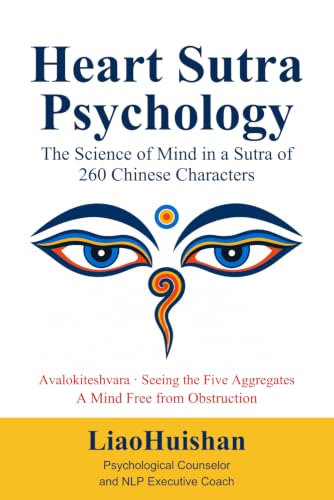 Heart Sutra PsychologyA reader-focused explanation of how the Heart Sutra connects emptiness, attachment, fear, and emotional freedom in everyday life.Buy the Paperback
View Heart Sutra Psychology in the LiaoHuishan Books collection →
This book is not written for people who want another beautiful idea to collect.
It is written for people who are ready to understand why they suffer—and begin changing the mental habits that keep that suffering alive.
Do not wait for another emotional explosion before asking why your mind has become so heavy.
Do not wait until fear has controlled another relationship, another decision, or another year of your life.
The mind becomes fearless not because life finally becomes controllable, but because it no longer needs to control everything in order to feel safe.
Empty the cup.
Put down what has been poisoning your inner world.
And make room for a different way of living.
Continue with Heart Sutra Psychology in paperback →
Heart Sutra Meaning: Why Attachment Creates Fear and How to Let Go
What does the Heart Sutra mean when it says:鈥淏ecause the mind has no obstruction, it has no fear鈥�?
Let me begin with the conclusion.
This is one of the most powerful teachings in the Heart Sutra. It reveals a psychological truth that remains deeply relevant today:
Fear often grows from attachment, the need for control, and the things the mind refuses to release.
When the mind is no longer trapped by attachment, fixation, control, and resistance, fear gradually loses the ground on which it stands.
This does not mean that you will never feel afraid again.
It means that fear will no longer dominate your mind, control your decisions, or imprison your life.
What Does 鈥淥bstruction鈥� Mean in the Heart Sutra?
In the Heart Sutra, an obstruction is anything that captures the mind and prevents it from moving freely.
It may be:
a relationship you cannot release;
an outcome you are desperate to control;
the recognition you cannot stop chasing;
the humiliation you replay every night;
the future you keep trying to predict;
the anger you refuse to put down;
or the identity you are terrified of losing.
An obstruction is not necessarily something outside you.
Very often, it is the psychological grip you maintain on something that has already changed, disappeared, or moved beyond your control.
Imagine trying to hold, possess, and control ten different things with only two hands.
You are afraid that someone will take one of them.
You are afraid that another will fall.
You are afraid that what you have gained will disappear.
You are so occupied with holding everything together that you can no longer see the road in front of you.
Eventually, you stumble.
You fall.
You injure yourself鈥攏ot necessarily because the road was impossible to walk, but because your hands and your mind were already overloaded.
Every human being also has only one mind.
What happens when you fill that mind with darkness, fear, control, anxiety, hostility, judgment, violence, jealousy, anger, calculation, indifference, revenge, and the endless desire to fight?
What happens when you seal all of it inside yourself with layer after layer of emotional plaster and psychological asphalt?
The mind gradually becomes like a stone filled with lead and covered in explosives.
It may still appear calm from the outside.
But inside, it is waiting for a trigger: a rejection, a criticism, a betrayal, a failure, a person who refuses to obey, or a future that does not follow your plan.
Then the explosion comes.
People often say:鈥淚 suddenly lost control.鈥�
But in most cases, the loss of control was not sudden.
The mind had been accumulating fear, anger, resentment, humiliation, and anxiety for years.
The final event merely lit the fuse.
Your Mind Is a Cup鈥擶hat Have You Been Pouring into It?
Let me explain the Heart Sutra鈥檚 teaching with a simpler image.
Imagine that your mind is a cup.
Every day, you pour something into it.
Perhaps you fill it with struggles for power, suspicion, fear, control, hostility, judgment, jealousy, anger, calculation, revenge, anxiety, and the constant urge to attack or defend yourself.
Soon, the cup becomes full.
Once it is full, what else can enter?
Is there room for warmth?
Love? Peace? Hope? Sincerity? Beauty? Compassion? Kindness?
There is no room left.
You may occasionally try to force something good into the cup.
Perhaps you read an inspiring passage, listen to a spiritual teacher, promise to become gentler, or decide that you should forgive.
For a brief moment, you may feel that you have finally returned from a life driven by instinct and hostility to something recognizably human.
But the mind that has been trained like a wounded and aggressive animal will soon begin rejecting goodness again.
Why? Because it has grown accustomed to hunger and conflict.
It has learned to survive through violence, anger, suspicion, and control.
It uses these forces to prove that it still exists.
So when peace appears, the mind distrusts it.
When kindness appears, the mind calls it weakness.
When tenderness appears, the mind calls it dangerous.
When sincerity appears, the mind becomes suspicious.
When stillness appears, the mind calls it cowardice.
This is one of the deepest psychological conflicts that most people never see.
A person may consciously want peace while unconsciously remaining addicted to conflict.
They may say they want love while repeatedly choosing relationships built on control.
They may say they want freedom while continuing to feed the thoughts that keep them imprisoned.
They may say they want to heal while protecting the very identity that was created by their wounds.
This is what it means for the mind to be obstructed.
The Wounded Beast Inside the Mind
The Heart Sutra is not telling you to pretend that fear does not exist.
It is not asking you to suppress anger, deny pain, or force yourself to become a morally perfect person.
It is saying something far more difficult:
Stop feeding the mental conditions that keep fear alive.
If you want the wounded beast within the mind to stop attacking everything good, do not begin by forcing it to become 鈥渂etter.鈥�
Begin by helping it feel less afraid.
The aggressive mind is often a frightened mind.
The controlling mind is often a frightened mind.
The suspicious mind is often a frightened mind.
The mind that cannot forgive, cannot rest, and cannot stop fighting is often terrified that the moment it relaxes, it will be hurt again.
So do not merely command yourself:
Be kind.
Stop being angry.
Let it go.
Think positively.
Become peaceful.
These instructions often fail because they address the behavior while ignoring the fear beneath it.
The beast does not need another order.
It needs to discover that it no longer has to live as though every moment were a battle for survival.
This is where the Heart Sutra becomes psychologically powerful.
It does not simply ask you to replace negative thoughts with positive thoughts.
It asks you to look directly at the attachment beneath the fear.
What are you trying to protect?
What are you desperate to control?
What are you afraid of losing?
Whose recognition are you still trying to earn?
Which old injury are you keeping alive because you believe your anger protects you?
What identity would collapse if you stopped fighting?
Until you see what the mind is clinging to, you cannot understand why it remains afraid.
How the Heart Sutra Connects Attachment and Fear
Where there is attachment, there is fear of loss.
Where there is control, there is fear of uncertainty.
Where there is dependence on approval, there is fear of rejection.
Where there is obsession with success, there is fear of failure.
Where there is a rigid identity, there is fear of anything that challenges it.
This is why fear cannot be understood only as an emotion.
Fear is often the shadow cast by attachment.
The tighter you grip something, the more terrified you become of losing it.
The more you try to control life, the more threatening every unpredictable event appears.
The more you depend on the outside world to confirm your worth, the more vulnerable your inner world becomes.
You may think that holding on gives you security.
But the Heart Sutra reveals the opposite:The things you refuse to release eventually become the things that control you.
You hold tightly to a relationship because you are afraid of being alone.
Yet the more tightly you hold, the more anxious, suspicious, and controlling you become.
You hold tightly to success because you are afraid of being insignificant.
Yet the more your identity depends on achievement, the more every setback feels like psychological death.
You hold tightly to other people鈥檚 approval because you are afraid that you are not worthy.
Yet the more you depend on their recognition, the less freedom you have to live according to your own values.
The mind believes attachment will protect it.
In reality, attachment produces another object that the mind must constantly defend.
This is the hidden mechanism behind much of human fear.鈥淣o Obstruction鈥� Does Not Mean Having No Feelings
To have no obstruction does not mean becoming emotionless.
It does not mean caring about nothing.
It does not mean abandoning your relationships, ambitions, responsibilities, or ordinary life.
And it certainly does not mean forcing yourself to remain calm when you are hurting.
It means that your mind no longer turns every feeling into a prison.
Sadness may arise, but you do not build your identity around it.
Fear may arise, but you do not allow it to make every decision.
Anger may arise, but you do not feed it until it becomes your personality.
Loss may happen, but you do not conclude that your life has lost all meaning.
Uncertainty may remain, but you stop demanding that the future give you guarantees before you allow yourself to live.
This is the difference between experiencing an emotion and being possessed by it.
The Heart Sutra does not promise that a life without attachment will contain no difficulty.
It shows us that when the mind stops clinging to everything it cannot control, difficulty no longer has the same power to imprison us.
The external situation may not change immediately.
The person who hurt you may never apologize.
The relationship may not return.
The opportunity may already be gone.
The future may remain uncertain.
Continue this Heart Sutra inquiry with the paperback 鈫�
But the psychological structure that keeps reproducing fear can begin to dissolve.
You no longer need the world to become perfectly controllable before your mind can experience peace.
Why Letting Go Is Not the Same as Giving Up
Many people resist letting go because they believe it means losing.
They think:
If I let go of anger, the other person wins.
If I stop controlling, everything will collapse.
If I release this relationship, it means my love was meaningless.
If I accept failure, it means I am weak.
If I stop fighting, I will become powerless.
But letting go does not mean denying what happened.
It does not mean abandoning responsibility.
It does not mean becoming passive or allowing other people to harm you.
Letting go means refusing to carry an experience long after it has stopped serving any meaningful purpose.
You can remember without continuing to bleed.
You can establish boundaries without living in hatred.
You can work toward a goal without making the result the measure of your worth.
You can love someone without trying to possess them.
You can protect yourself without turning your entire life into a battlefield.
This is Buddhist non-attachment.
It is not indifference.
It is freedom from psychological captivity.
How to Empty the Cup
So what should you do with a mind that is already full?
Empty the cup.
Do not continue filling your limited life with thoughts that make the mind darker, heavier, and more violent.
Stop repeatedly pouring in resentment.
Stop using old wounds to justify new cruelty.
Stop feeding the fantasy that controlling everything will finally make you safe.
Stop rehearsing the same humiliation until it becomes the central story of your identity.
Stop treating every disagreement as an attack and every uncertainty as a disaster.
This does not mean erasing memory or denying reality.
It means refusing to use your remaining life to feed the wounded beast inside you.
Pour it out.
Not all at once, and not through forced positivity.
Pour it out by seeing each attachment clearly.
Pour it out by recognizing every fear you have disguised as anger.
Pour it out by observing the desire for control before it becomes another conflict.
Pour it out by refusing to let one painful experience dictate the meaning of your entire life.
Ask yourself:
What am I refusing to release?
What am I trying to control?
What loss am I constantly preparing for?
What am I afraid will happen if I stop fighting?
Which belief keeps telling me that I am unsafe?
Is this belief describing the present鈥攐r repeating the past?
When the cup is no longer overflowing with hostility and fear, something else finally has room to enter:
Clarity. Warmth. Beauty. Compassion. Sincerity. Peace.
The mind does not become empty in the sense of becoming lifeless.
It becomes empty of the burdens that have prevented it from living.
That is why the Heart Sutra says:鈥淏ecause the mind has no obstruction, it has no fear.鈥�
When obstruction is released, fear loses the ground on which it stands.
Understanding the Heart Sutra Is Not Enough
You may understand this passage now.
But understanding is not the same as transformation.
A mind shaped by years of attachment, anxiety, resentment, and control will not become free simply because it agrees with a beautiful sentence.
When the next conflict arrives, the old machinery may begin operating again.
You will try to control.
You will cling.
You will become afraid.
You will defend the same wounded identity.
Then you may wonder:
鈥淚f I understand the truth, why do I still suffer?鈥�
Because insight must become practice.
You need more than one quotation from the Heart Sutra.
You need to understand how suffering is created, how attachment operates, how fear becomes a habit, and how awareness gradually returns freedom to the mind.
The Heart Sutra gives us an extraordinary direction.
But knowing the direction is not the same as walking the path.
Stop Saving Articles. Start Changing the Mind That Creates Your Suffering
If you have spent years reading spiritual quotations, psychological advice, and self-help content鈥攂ut you are still controlled by the same fear, anger, attachment, and anxiety鈥攖hen collecting more isolated ideas will not change your life.
You need a complete framework.
You need to see how suffering begins in the mind, why the mind keeps holding on, and how Buddhist wisdom can be applied when relationships fail, careers become uncertain, emotions overwhelm you, or life refuses to follow your plan.
That is why I created my Buddhist psychology book series.
These books do not ask you to worship the Buddha or memorize abstract Buddhist terminology. They translate the Buddha鈥檚 teachings into a practical path for modern psychological suffering.
They will help you understand:
why attachment creates fear and anxiety;
why the mind repeatedly returns to painful thoughts;
how the need for control destroys inner peace;
why external validation can never create lasting security;
how impermanence changes the way we understand loss;
and how awareness can gradually loosen the psychological structures that keep us trapped.
If your mind has been carrying too much for too long, do not simply save this article and return to the same cycle.
Begin learning how to put the weight down.
Heart Sutra PsychologyA reader-focused explanation of how the Heart Sutra connects emptiness, attachment, fear, and emotional freedom in everyday life.Buy the PaperbackView Heart Sutra Psychology in the LiaoHuishan Books collection 鈫�
This book is not written for people who want another beautiful idea to collect.
It is written for people who are ready to understand why they suffer鈥攁nd begin changing the mental habits that keep that suffering alive.
Do not wait for another emotional explosion before asking why your mind has become so heavy.
Do not wait until fear has controlled another relationship, another decision, or another year of your life.
The mind becomes fearless not because life finally becomes controllable, but because it no longer needs to control everything in order to feel safe.
Empty the cup.
Put down what has been poisoning your inner world.
And make room for a different way of living.
Continue with Heart Sutra Psychology in paperback 鈫�
Heart Sutra Meaning: Why Attachment Creates Fear and How to Let Go
What does the Heart Sutra mean when it says:鈥淏ecause the mind has no obstruction, it has no fear鈥�?
Let me begin with the conclusion.
This is one of the most powerful teachings in the Heart Sutra. It reveals a psychological truth that remains deeply relevant today:
Fear often grows from attachment, the need for control, and the things the mind refuses to release.
When the mind is no longer trapped by attachment, fixation, control, and resistance, fear gradually loses the ground on which it stands.
This does not mean that you will never feel afraid again.
It means that fear will no longer dominate your mind, control your decisions, or imprison your life.
What Does 鈥淥bstruction鈥� Mean in the Heart Sutra?
In the Heart Sutra, an obstruction is anything that captures the mind and prevents it from moving freely.
It may be:
a relationship you cannot release;
an outcome you are desperate to control;
the recognition you cannot stop chasing;
the humiliation you replay every night;
the future you keep trying to predict;
the anger you refuse to put down;
or the identity you are terrified of losing.
An obstruction is not necessarily something outside you.
Very often, it is the psychological grip you maintain on something that has already changed, disappeared, or moved beyond your control.
Imagine trying to hold, possess, and control ten different things with only two hands.
You are afraid that someone will take one of them.
You are afraid that another will fall.
You are afraid that what you have gained will disappear.
You are so occupied with holding everything together that you can no longer see the road in front of you.
Eventually, you stumble.
You fall.
You injure yourself鈥攏ot necessarily because the road was impossible to walk, but because your hands and your mind were already overloaded.
Every human being also has only one mind.
What happens when you fill that mind with darkness, fear, control, anxiety, hostility, judgment, violence, jealousy, anger, calculation, indifference, revenge, and the endless desire to fight?
What happens when you seal all of it inside yourself with layer after layer of emotional plaster and psychological asphalt?
The mind gradually becomes like a stone filled with lead and covered in explosives.
It may still appear calm from the outside.
But inside, it is waiting for a trigger: a rejection, a criticism, a betrayal, a failure, a person who refuses to obey, or a future that does not follow your plan.
Then the explosion comes.
People often say:鈥淚 suddenly lost control.鈥�
But in most cases, the loss of control was not sudden.
The mind had been accumulating fear, anger, resentment, humiliation, and anxiety for years.
The final event merely lit the fuse.
Your Mind Is a Cup鈥擶hat Have You Been Pouring into It?
Let me explain the Heart Sutra鈥檚 teaching with a simpler image.
Imagine that your mind is a cup.
Every day, you pour something into it.
Perhaps you fill it with struggles for power, suspicion, fear, control, hostility, judgment, jealousy, anger, calculation, revenge, anxiety, and the constant urge to attack or defend yourself.
Soon, the cup becomes full.
Once it is full, what else can enter?
Is there room for warmth?
Love? Peace? Hope? Sincerity? Beauty? Compassion? Kindness?
There is no room left.
You may occasionally try to force something good into the cup.
Perhaps you read an inspiring passage, listen to a spiritual teacher, promise to become gentler, or decide that you should forgive.
For a brief moment, you may feel that you have finally returned from a life driven by instinct and hostility to something recognizably human.
But the mind that has been trained like a wounded and aggressive animal will soon begin rejecting goodness again.
Why? Because it has grown accustomed to hunger and conflict.
It has learned to survive through violence, anger, suspicion, and control.
It uses these forces to prove that it still exists.
So when peace appears, the mind distrusts it.
When kindness appears, the mind calls it weakness.
When tenderness appears, the mind calls it dangerous.
When sincerity appears, the mind becomes suspicious.
When stillness appears, the mind calls it cowardice.
This is one of the deepest psychological conflicts that most people never see.
A person may consciously want peace while unconsciously remaining addicted to conflict.
They may say they want love while repeatedly choosing relationships built on control.
They may say they want freedom while continuing to feed the thoughts that keep them imprisoned.
They may say they want to heal while protecting the very identity that was created by their wounds.
This is what it means for the mind to be obstructed.
The Wounded Beast Inside the Mind
The Heart Sutra is not telling you to pretend that fear does not exist.
It is not asking you to suppress anger, deny pain, or force yourself to become a morally perfect person.
It is saying something far more difficult:
Stop feeding the mental conditions that keep fear alive.
If you want the wounded beast within the mind to stop attacking everything good, do not begin by forcing it to become 鈥渂etter.鈥�
Begin by helping it feel less afraid.
The aggressive mind is often a frightened mind.
The controlling mind is often a frightened mind.
The suspicious mind is often a frightened mind.
The mind that cannot forgive, cannot rest, and cannot stop fighting is often terrified that the moment it relaxes, it will be hurt again.
So do not merely command yourself:
Be kind.
Stop being angry.
Let it go.
Think positively.
Become peaceful.
These instructions often fail because they address the behavior while ignoring the fear beneath it.
The beast does not need another order.
It needs to discover that it no longer has to live as though every moment were a battle for survival.
This is where the Heart Sutra becomes psychologically powerful.
It does not simply ask you to replace negative thoughts with positive thoughts.
It asks you to look directly at the attachment beneath the fear.
What are you trying to protect?
What are you desperate to control?
What are you afraid of losing?
Whose recognition are you still trying to earn?
Which old injury are you keeping alive because you believe your anger protects you?
What identity would collapse if you stopped fighting?
Until you see what the mind is clinging to, you cannot understand why it remains afraid.
How the Heart Sutra Connects Attachment and Fear
Where there is attachment, there is fear of loss.
Where there is control, there is fear of uncertainty.
Where there is dependence on approval, there is fear of rejection.
Where there is obsession with success, there is fear of failure.
Where there is a rigid identity, there is fear of anything that challenges it.
This is why fear cannot be understood only as an emotion.
Fear is often the shadow cast by attachment.
The tighter you grip something, the more terrified you become of losing it.
The more you try to control life, the more threatening every unpredictable event appears.
The more you depend on the outside world to confirm your worth, the more vulnerable your inner world becomes.
You may think that holding on gives you security.
But the Heart Sutra reveals the opposite:The things you refuse to release eventually become the things that control you.
You hold tightly to a relationship because you are afraid of being alone.
Yet the more tightly you hold, the more anxious, suspicious, and controlling you become.
You hold tightly to success because you are afraid of being insignificant.
Yet the more your identity depends on achievement, the more every setback feels like psychological death.
You hold tightly to other people鈥檚 approval because you are afraid that you are not worthy.
Yet the more you depend on their recognition, the less freedom you have to live according to your own values.
The mind believes attachment will protect it.
In reality, attachment produces another object that the mind must constantly defend.
This is the hidden mechanism behind much of human fear.鈥淣o Obstruction鈥� Does Not Mean Having No Feelings
To have no obstruction does not mean becoming emotionless.
It does not mean caring about nothing.
It does not mean abandoning your relationships, ambitions, responsibilities, or ordinary life.
And it certainly does not mean forcing yourself to remain calm when you are hurting.
It means that your mind no longer turns every feeling into a prison.
Sadness may arise, but you do not build your identity around it.
Fear may arise, but you do not allow it to make every decision.
Anger may arise, but you do not feed it until it becomes your personality.
Loss may happen, but you do not conclude that your life has lost all meaning.
Uncertainty may remain, but you stop demanding that the future give you guarantees before you allow yourself to live.
This is the difference between experiencing an emotion and being possessed by it.
The Heart Sutra does not promise that a life without attachment will contain no difficulty.
It shows us that when the mind stops clinging to everything it cannot control, difficulty no longer has the same power to imprison us.
The external situation may not change immediately.
The person who hurt you may never apologize.
The relationship may not return.
The opportunity may already be gone.
The future may remain uncertain.
Continue this Heart Sutra inquiry with the paperback 鈫�
But the psychological structure that keeps reproducing fear can begin to dissolve.
You no longer need the world to become perfectly controllable before your mind can experience peace.
Why Letting Go Is Not the Same as Giving Up
Many people resist letting go because they believe it means losing.
They think:
If I let go of anger, the other person wins.
If I stop controlling, everything will collapse.
If I release this relationship, it means my love was meaningless.
If I accept failure, it means I am weak.
If I stop fighting, I will become powerless.
But letting go does not mean denying what happened.
It does not mean abandoning responsibility.
It does not mean becoming passive or allowing other people to harm you.
Letting go means refusing to carry an experience long after it has stopped serving any meaningful purpose.
You can remember without continuing to bleed.
You can establish boundaries without living in hatred.
You can work toward a goal without making the result the measure of your worth.
You can love someone without trying to possess them.
You can protect yourself without turning your entire life into a battlefield.
This is Buddhist non-attachment.
It is not indifference.
It is freedom from psychological captivity.
How to Empty the Cup
So what should you do with a mind that is already full?
Empty the cup.
Do not continue filling your limited life with thoughts that make the mind darker, heavier, and more violent.
Stop repeatedly pouring in resentment.
Stop using old wounds to justify new cruelty.
Stop feeding the fantasy that controlling everything will finally make you safe.
Stop rehearsing the same humiliation until it becomes the central story of your identity.
Stop treating every disagreement as an attack and every uncertainty as a disaster.
This does not mean erasing memory or denying reality.
It means refusing to use your remaining life to feed the wounded beast inside you.
Pour it out.
Not all at once, and not through forced positivity.
Pour it out by seeing each attachment clearly.
Pour it out by recognizing every fear you have disguised as anger.
Pour it out by observing the desire for control before it becomes another conflict.
Pour it out by refusing to let one painful experience dictate the meaning of your entire life.
Ask yourself:
What am I refusing to release?
What am I trying to control?
What loss am I constantly preparing for?
What am I afraid will happen if I stop fighting?
Which belief keeps telling me that I am unsafe?
Is this belief describing the present鈥攐r repeating the past?
When the cup is no longer overflowing with hostility and fear, something else finally has room to enter:
Clarity. Warmth. Beauty. Compassion. Sincerity. Peace.
The mind does not become empty in the sense of becoming lifeless.
It becomes empty of the burdens that have prevented it from living.
That is why the Heart Sutra says:鈥淏ecause the mind has no obstruction, it has no fear.鈥�
When obstruction is released, fear loses the ground on which it stands.
Understanding the Heart Sutra Is Not Enough
You may understand this passage now.
But understanding is not the same as transformation.
A mind shaped by years of attachment, anxiety, resentment, and control will not become free simply because it agrees with a beautiful sentence.
When the next conflict arrives, the old machinery may begin operating again.
You will try to control.
You will cling.
You will become afraid.
You will defend the same wounded identity.
Then you may wonder:
鈥淚f I understand the truth, why do I still suffer?鈥�
Because insight must become practice.
You need more than one quotation from the Heart Sutra.
You need to understand how suffering is created, how attachment operates, how fear becomes a habit, and how awareness gradually returns freedom to the mind.
The Heart Sutra gives us an extraordinary direction.
But knowing the direction is not the same as walking the path.
Stop Saving Articles. Start Changing the Mind That Creates Your Suffering
If you have spent years reading spiritual quotations, psychological advice, and self-help content鈥攂ut you are still controlled by the same fear, anger, attachment, and anxiety鈥攖hen collecting more isolated ideas will not change your life.
You need a complete framework.
You need to see how suffering begins in the mind, why the mind keeps holding on, and how Buddhist wisdom can be applied when relationships fail, careers become uncertain, emotions overwhelm you, or life refuses to follow your plan.
That is why I created my Buddhist psychology book series.
These books do not ask you to worship the Buddha or memorize abstract Buddhist terminology. They translate the Buddha鈥檚 teachings into a practical path for modern psychological suffering.
They will help you understand:
why attachment creates fear and anxiety;
why the mind repeatedly returns to painful thoughts;
how the need for control destroys inner peace;
why external validation can never create lasting security;
how impermanence changes the way we understand loss;
and how awareness can gradually loosen the psychological structures that keep us trapped.
If your mind has been carrying too much for too long, do not simply save this article and return to the same cycle.
Begin learning how to put the weight down.
Heart Sutra PsychologyA reader-focused explanation of how the Heart Sutra connects emptiness, attachment, fear, and emotional freedom in everyday life.Buy the PaperbackView Heart Sutra Psychology in the LiaoHuishan Books collection 鈫�
This book is not written for people who want another beautiful idea to collect.
It is written for people who are ready to understand why they suffer鈥攁nd begin changing the mental habits that keep that suffering alive.
Do not wait for another emotional explosion before asking why your mind has become so heavy.
Do not wait until fear has controlled another relationship, another decision, or another year of your life.
The mind becomes fearless not because life finally becomes controllable, but because it no longer needs to control everything in order to feel safe.
Empty the cup.
Put down what has been poisoning your inner world.
And make room for a different way of living.