Why Did the Buddha Leave His Palace? The Four Sights That Changed Siddhartha's Life
Why did the Buddha leave his palace? The familiar answer is that Prince Siddhartha saw four things his protected life could no longer hide: old age, sickness, death, and a wandering seeker. But the deeper reason was not that he hated his family or rejected ordinary life. He had discovered a question that comfort could not answer: If everything I love can change, weaken, and disappear, is there a way to live without being ruled by fear?
This is the story of the Four Sights and the Great Renunciation—not merely as a religious legend, but as a psychological turning point that still speaks to anyone whose carefully arranged life has been interrupted by reality.
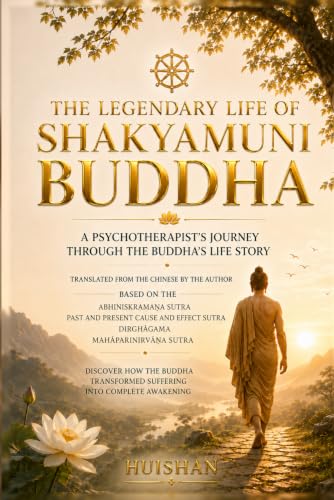
The Legendary Life of Shakyamuni Buddha
Follow Siddhartha from sheltered prince to awakened teacher through a psychologically informed retelling of the Buddha's life.
For readers who want the human story behind Buddhist teachings—not only names, dates, and doctrines.
Read the Buddha's Story on Amazon →The Palace Was Designed to Keep Suffering Out
In traditional biographies, Siddhartha Gautama grew up surrounded by privilege. His father, King Suddhodana, wanted him to become a powerful ruler. The prince was therefore protected from whatever might awaken an interest in spiritual life. Youth, beauty, music, family, and pleasure filled the palace; aging, illness, and death remained outside its walls.
The palace was not simply a building. Psychologically, it represented a protected worldview: the belief that safety can be secured by controlling what we see. Many modern lives contain a similar palace. We curate our feeds, avoid difficult conversations, postpone medical appointments, and speak about death as though it belongs to another species. The strategy can work for a while. It cannot work forever.
What Were the Buddha's Four Sights?
Later Buddhist narrative traditions tell how Siddhartha left the palace and encountered four sights. Different texts and artistic traditions vary in their details, and early Pali material associates a closely related account with an earlier Buddha named Vipassi. The story nevertheless became one of the most influential ways of explaining Siddhartha's awakening to the human condition.
1. An Old Man
Siddhartha saw a person whose body had been altered by age. He learned that growing old was not an accident that happened to an unlucky few. If a person lived long enough, aging awaited everyone—including the prince himself and every person he loved.
The shock was not merely the sight of wrinkles or weakness. It was the collapse of an assumption: youth had felt like an identity, but it was only a temporary condition.
2. A Sick Person
The second sight was illness. A body that had seemed reliable could become painful, dependent, or difficult to control. Status could not bargain with disease. Wealth might improve treatment, but it could not purchase permanent immunity from vulnerability.
Here the Buddha story touches a modern anxiety. Much of our fear comes from demanding that the body guarantee what no body can guarantee. Siddhartha did not yet possess an answer, but he had begun to ask the right question.
3. A Dead Body
The third sight was death. The prince learned that death was not only a public event involving strangers. It was the destination of every conditioned life. The people inside the palace were not exempt; the palace merely delayed the conversation.
This realization can sound bleak, yet Buddhist reflection on death is not meant to make life meaningless. It makes time meaningful. When permanence is no longer assumed, affection becomes less casual, attention becomes less disposable, and the present is no longer treated as a waiting room.
4. A Wandering Ascetic
The fourth sight changed the emotional direction of the story. Siddhartha saw a seeker who possessed little yet appeared composed. Old age, sickness, and death revealed the problem; the wandering ascetic revealed the possibility of a response.
The prince did not yet know whether liberation was possible. He only saw that a human being could turn toward suffering instead of spending an entire life running from it.
Free Four Sights Reflection Guide
Receive seven printable questions for examining change, fear, attachment, and one compassionate next action.
Why Did Siddhartha Really Leave?
Siddhartha left because the life prepared for him could offer pleasure without resolving insecurity. Every pleasure depended on conditions. Every relationship carried the possibility of separation. Every identity—prince, husband, father, young man—would change.
The Great Renunciation is therefore not best understood as a simple rejection of luxury. It is a refusal to mistake distraction for freedom. Siddhartha was searching for a form of peace that did not collapse whenever circumstances changed.
This also explains why the story remains uncomfortable. He left behind real relationships and responsibilities, and later traditions have wrestled with the human cost of that decision. A thoughtful reading does not need to turn abandonment into romance. The story's enduring question is narrower and more useful: What truth has my current life made it easy not to see?
The Four Sights as a Map of Modern Avoidance
Each sight exposes a common psychological defense:
- Old age confronts the fantasy that identity can remain unchanged.
- Illness confronts the fantasy that control guarantees safety.
- Death confronts the fantasy that there will always be more time.
- The seeker confronts the fantasy that avoidance is our only option.
Buddhist psychology begins when we notice how much energy is spent protecting these fantasies. We cling not only to people and possessions, but also to predictions: “This must last,” “My body must obey me,” “Nothing should interrupt my plan,” or “I cannot live if this changes.” The pain of life is real. The additional struggle created by these demands is often where practice begins.
What Can We Learn Without Leaving Our Own Lives?
Most readers do not need to imitate Siddhartha's outward departure. The modern version of leaving the palace may be quieter:
- Stop editing an uncomfortable fact out of your awareness.
- Name the fear that fact creates.
- Notice the promise of control you have been trying to extract from life.
- Ask what a compassionate response would look like if certainty were unavailable.
The Buddha's journey did not end when he walked through the palace gates. Renunciation was the beginning of an experiment. Years of austerity followed, and even extreme self-denial failed to provide the answer. Only later did he discover the Middle Way and awaken beneath the Bodhi tree. The story matters because he was willing to revise his methods when they did not end suffering.
A Story About Seeing Clearly
The Four Sights did not instantly transform Siddhartha into the Buddha. They made it impossible for him to return completely to unconscious comfort. Once suffering had a face, the old life could no longer provide the same innocence.
That may be the most honest meaning of the story. Awakening does not always begin with serenity. Sometimes it begins when the wall between our preferred world and the real world develops a crack.
Put the Four Sights into practice: Use the free Four Sights Reflection Guide to work through seven grounded questions about change, fear, and what you may be avoiding.
If you want to continue beyond the Four Sights and follow the human journey from Siddhartha's departure to his awakening and teaching life, explore the dedicated page for The Legendary Life of Shakyamuni Buddha: A Psychotherapist's Journey Through the Buddha's Life Story.
Explore the Complete Buddha Biography on Amazon →
Read next
- Buddha's Life hub
- How did Siddhartha Gautama become the Buddha?
- Was the Buddha really a prince?
- Why did the Buddha reject extreme asceticism?
- Buddhist Psychology hub
FAQ
Why did the Buddha leave his palace?
Traditional stories say the Four Sights—aging, illness, death, and a renunciant—revealed that luxury cannot cancel vulnerability. He left to seek a reliable end to suffering, not a vacation from duty.
What are the Four Sights?
An old person, a sick person, a corpse, and a seeker/ascetic. Together they confront impermanence and point toward a path of practice.
Is the palace story literal history?
Details vary by source and include legendary shaping. The psychological core remains: protected comfort can delay meeting reality until crisis forces honesty.
Does leaving home glorify abandoning family?
Traditional texts wrestle with this tension. Psychologically, the point is prioritizing truth about suffering—not a universal instruction to abandon dependents. Modern ethics still matter.
How can modern readers apply the Four Sights?
Use them as reminders: bodies age, illness happens, death is certain, and a wise response is trainingnot denial or panic shopping for distractions.