
Free Four Sights Reflection Guide | 7 Questions for Change

Hello everyone, I am HUISHAN.

Free Four Sights Reflection Guide: 7 Questions for Change

The Four Sights changed Prince Siddhartha because they forced him to see what comfort had hidden: aging, illness, death, and the possibility of seeking a wiser way to live. This printable reflection guide helps you use that ancient story to examine one real situation in your own life.

How to use this guide

Choose one change, loss, fear, or unresolved decision. Write slowly. You do not need to force a positive conclusion. The purpose is to see clearly enough to choose one compassionate next action.

1. What fact have I been keeping outside the palace?

Name one reality you have been avoiding because it threatens comfort, identity, certainty, or control. Write the fact without explaining it away.


2. What does change make me afraid of losing?

Look beneath the immediate problem. Are you afraid of losing approval, youth, health, belonging, status, a relationship, or the version of yourself you expected to become?


3. What am I demanding from life?

Complete this sentence honestly: “For me to feel safe, this situation must...” Then ask whether life has ever promised that condition.


4. Which of the Four Sights does this situation resemble?

  • Aging: something cannot remain as it was.
  • Illness: the body or mind cannot be controlled completely.
  • Death: an ending cannot be postponed forever.
  • The seeker: a different response is possible even when certainty is not.


5. What is the pain, and what is the struggle added by resistance?

The pain may be real. Resistance often adds a second layer: “This must not happen,” “I should already be over this,” or “I cannot live if this changes.” Separate the two layers.


6. What would the Middle Way avoid?

Identify two extremes: denial versus despair, clinging versus abandonment, passivity versus force. What balanced response would neither pretend nor punish?


7. What is one compassionate action I can take within 24 hours?

Choose one action small enough to complete: tell the truth, ask for help, set a boundary, make an appointment, rest, apologize, or stop rehearsing an argument that has not happened.


Keep this guide

Use your browser's Print command and choose “Save as PDF,” or print the page and write by hand.

Continue the Buddha's Journey

The Four Sights were only the beginning. Siddhartha still had to leave the palace, test severe austerity, reject another extreme, discover the Middle Way, and awaken beneath the Bodhi tree.
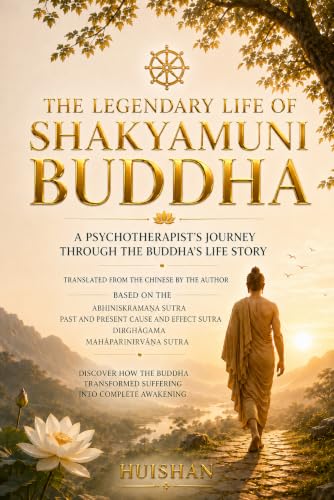
The Legendary Life of Shakyamuni Buddha book cover by LiaoHuishan

The Legendary Life of Shakyamuni Buddha

A psychologically informed journey from Siddhartha's sheltered life to awakening and forty-five years of teaching.

BUY THE BOOK ON AMAZON.COM →

Before choosing an edition, read the complete book guide for The Legendary Life of Shakyamuni Buddha, or browse all books by LiaoHuishan.

Return to: Why Did the Buddha Leave His Palace?

Popular posts from this blog

Theravada vs Mahayana Buddhism: Key Differences

 Two Paths of Awakening: Liberation from Suffering or Transformation Within the World? Theravada Buddhism and Mahayana Buddhism are the two major traditions that have shaped Buddhist practice across Asia. Although both traditions are rooted in the teachings of the Buddha, they developed different understandings of suffering, liberation, enlightenment, and the purpose of spiritual practice. The simplest way to understand the difference is this: Theravada Buddhism focuses on how human beings liberate themselves from suffering and the cycle of samsara. Mahayana Buddhism focuses on how awakening and Buddha-nature can unfold within this very world. One tradition emphasizes transcendence beyond the cycle of existence. The other emphasizes transformation through wisdom and compassion while remaining engaged with life. However, the deeper question is not which tradition is superior. The deeper question is: What kind of spiritual path truly matches the way we understand suffering, freedom...

Why Did the Buddha Leave His Palace? The Four Sights That Changed Siddhartha's Life

Why Did the Buddha Leave His Palace? The Four Sights That Changed Siddhartha's Life Why did the Buddha leave his palace? The familiar answer is that Prince Siddhartha saw four things his protected life could no longer hide: old age, sickness, death, and a wandering seeker. But the deeper reason was not that he hated his family or rejected ordinary life. He had discovered a question that comfort could not answer: If everything I love can change, weaken, and disappear, is there a way to live without being ruled by fear? This is the story of the Four Sights and the Great Renunciation—not merely as a religious legend, but as a psychological turning point that still speaks to anyone whose carefully arranged life has been interrupted by reality. The Legendary Life of Shakyamuni Buddha Follow Siddhartha from sheltered prince to awakened teacher through a psychologically informed retelling of the Buddha's life. For readers who want the human story behind Bud...

Hinduism vs Buddhism: Why India’s Caste System Endures

Hello everyone, I’m Huishan. Have you ever wondered: Two major religions were born in India, yet Buddhism teaches “equality and liberation,” while Hinduism preserves a system of “caste and reincarnation.” The Buddha taught people to let go of identity and transcend desire; while Hinduism taught people to accept their destiny and submit to social order. Why, after more than two thousand years of tension between these two traditions, did Buddhism eventually retreat from its homeland in India, while Hinduism became even more deeply rooted? Why has the caste system never been completely dismantled? Today, I want to take you deeper into these two seemingly closely related systems and examine just how fundamentally different they really are. Two Spiritual Traditions, Two Different Directions In the 6th century BCE, India gave rise to two enormous spiritual ...