Disclosure: This article introduces a book written by LiaoHuishan. The Amazon link below takes you to the book’s retail page.
You meditate, clear your energy, repeat affirmations, and wait for the right sign. For a few hours, you may feel lighter. Then the same fear, relationship conflict, money problem, or avoided decision returns.
If this sounds familiar, the question may not be whether you need to “open” a chakra again. The more useful question is: what if your spiritual practice is helping you feel better without helping you face what must change?
This does not mean chakra practice is useless. Reflection, breathwork, ritual, and meditation can create space around difficult emotions. But a practice becomes limiting when it replaces honest observation, practical action, or appropriate professional support. Psychology often describes this pattern as spiritual bypassing: using spiritual ideas to avoid unresolved emotional or real-life problems.
What Does It Mean When Chakra Healing Isn’t Working?
“Not working” does not necessarily mean you felt nothing. You may have experienced calm, warmth, hope, or emotional release. The problem is that temporary relief and lasting change are not the same thing.
A grounded test is simple: after the practice, are you becoming more able to make decisions, set boundaries, tolerate uncomfortable feelings, speak honestly, and act according to what you know? If the answer is consistently no, the ritual may be soothing the symptom while leaving the pattern untouched.
7 Signs Spiritual Practice Has Become Avoidance
1. You keep clearing the same chakra but avoid the same decision
You may repeatedly focus on your root chakra while refusing to examine debt, unstable work, or the practical habits affecting your security. Grounding is not only an internal sensation. It can also mean opening the bank statement, making a plan, and taking one manageable step.
2. “Protecting your energy” has replaced healthy boundaries
Protection rituals may feel safer than telling someone no. But a boundary becomes real only when it changes what you permit, communicate, or do. If the relationship remains unchanged while the ritual repeats, the missing step may be behavioral rather than energetic.
3. You call fear “intuition” without testing it
Intuition can be meaningful, but anxiety can also produce powerful sensations and convincing stories. Ask what evidence supports the message, what evidence challenges it, and what small action could test it safely. Reality testing does not destroy intuition; it helps separate insight from fear.
4. You use “divine timing” to postpone action indefinitely
Patience can be wise. Endless postponement is different. If you are always waiting for another sign before applying, leaving, apologizing, creating, or speaking, spiritual language may be making avoidance sound sacred.
5. You pursue constant positivity and suppress anger or grief
Not every difficult emotion is low vibration. Anger may reveal a violated boundary. Grief may show what mattered. Fear may point to risk or vulnerability. The aim is not to obey every emotion, but to listen before trying to erase it.
6. You confuse emotional release with permanent transformation
A powerful session can produce tears, tingling, peace, or catharsis. Those experiences may matter, but the deeper measure is what happens afterward. Do you communicate differently? Do you make a clearer choice? Do you stop repeating the behavior that keeps creating the same pain?
7. You collect explanations but avoid measurable change
It is easy to accumulate spiritual interpretations: blocked energy, karmic lessons, twin-flame dynamics, or a difficult transit. Explanations can offer meaning, but they can also become a hiding place. A useful explanation should lead toward clearer observation and a responsible next step.
A Grounded Way to Work with the Seven Chakras
You do not have to reject the chakra system. You can use it as a set of seven practical questions:
- Root: What fact about money, health, work, or safety am I avoiding?
- Sacral: What feeling or desire am I refusing to acknowledge?
- Solar plexus: What action am I postponing because I fear the outcome?
- Heart: Where do compassion and boundaries need to exist together?
- Throat: What truth needs to be expressed clearly and responsibly?
- Third eye: What evidence supports—or contradicts—my interpretation?
- Crown: What meaning helps me live more honestly rather than escape reality?
For each question, write down one observable fact and one concrete action you can take within 24 hours. The action can be small: send an email, check a balance, schedule a conversation, name a feeling, ask for help, or stop making one promise you cannot keep.
What Real Change Looks Like
Real change is not always dramatic. It may look like tolerating discomfort without immediately reaching for another explanation. It may mean admitting that a relationship is harmful, that a financial habit needs attention, or that spiritual practice cannot replace medical or psychological care.
A responsible spiritual path should increase your capacity to meet life—not make you disappear from it.
A Book for Readers Ready to Stop Healing in Circles
If you recognize yourself in these patterns, Why Chakra Healing Isn’t Working: A Grounded Guide to Spiritual Bypassing, Psychology, and Real-Life Change Through the Seven Chakras develops this approach in greater depth. It reframes the seven chakras as practical psychological maps and includes a 21-day grounding practice built around honest observation, reality testing, and concrete action.
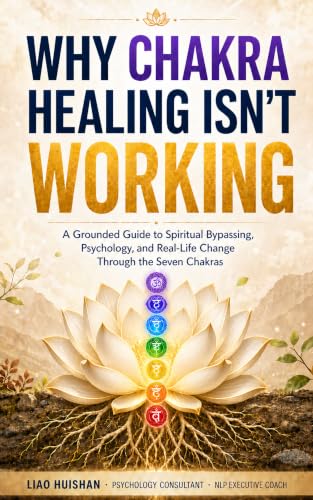
A grounded 21-day path from insight to action
Why Chakra Healing Isn’t Working
Stop repeating rituals that only bring temporary relief. Learn to recognize spiritual bypassing, reality-test your interpretations, and turn the seven chakras into practical steps for money, emotions, relationships, expression, judgment, and meaning.
- Identify what you may be avoiding beneath “healing”
- Use seven grounded psychological maps
- Begin a practical 21-day grounding process
Available in Kindle, paperback, and hardcover.
This article is educational and reflective. It is not medical or mental-health treatment and does not replace qualified professional care.
Frequently Asked Questions
Does chakra healing really work?
People may find meditation, ritual, and chakra reflection calming or meaningful. Whether a practice supports lasting change depends on how it affects observable choices, behavior, relationships, and wellbeing. Spiritual practice should not replace appropriate professional care.
What is spiritual bypassing?
Spiritual bypassing is the use of spiritual beliefs or practices to avoid difficult emotions, unresolved psychological patterns, practical problems, or necessary action.
How can I tell whether my practice is helping?
Track what changes outside the practice itself. Look for clearer decisions, healthier boundaries, more honest communication, greater emotional tolerance, and concrete steps toward the problem you are facing.
Disclosure: This article introduces a book written by LiaoHuishan. The Amazon link below takes you to the book’s retail page.
You meditate, clear your energy, repeat affirmations, and wait for the right sign. For a few hours, you may feel lighter. Then the same fear, relationship conflict, money problem, or avoided decision returns.
If this sounds familiar, the question may not be whether you need to “open” a chakra again. The more useful question is: what if your spiritual practice is helping you feel better without helping you face what must change?
This does not mean chakra practice is useless. Reflection, breathwork, ritual, and meditation can create space around difficult emotions. But a practice becomes limiting when it replaces honest observation, practical action, or appropriate professional support. Psychology often describes this pattern as spiritual bypassing: using spiritual ideas to avoid unresolved emotional or real-life problems.
What Does It Mean When Chakra Healing Isn’t Working?
“Not working” does not necessarily mean you felt nothing. You may have experienced calm, warmth, hope, or emotional release. The problem is that temporary relief and lasting change are not the same thing.
A grounded test is simple: after the practice, are you becoming more able to make decisions, set boundaries, tolerate uncomfortable feelings, speak honestly, and act according to what you know? If the answer is consistently no, the ritual may be soothing the symptom while leaving the pattern untouched.
7 Signs Spiritual Practice Has Become Avoidance
1. You keep clearing the same chakra but avoid the same decision
You may repeatedly focus on your root chakra while refusing to examine debt, unstable work, or the practical habits affecting your security. Grounding is not only an internal sensation. It can also mean opening the bank statement, making a plan, and taking one manageable step.
2. “Protecting your energy” has replaced healthy boundaries
Protection rituals may feel safer than telling someone no. But a boundary becomes real only when it changes what you permit, communicate, or do. If the relationship remains unchanged while the ritual repeats, the missing step may be behavioral rather than energetic.
3. You call fear “intuition” without testing it
Intuition can be meaningful, but anxiety can also produce powerful sensations and convincing stories. Ask what evidence supports the message, what evidence challenges it, and what small action could test it safely. Reality testing does not destroy intuition; it helps separate insight from fear.
4. You use “divine timing” to postpone action indefinitely
Patience can be wise. Endless postponement is different. If you are always waiting for another sign before applying, leaving, apologizing, creating, or speaking, spiritual language may be making avoidance sound sacred.
5. You pursue constant positivity and suppress anger or grief
Not every difficult emotion is low vibration. Anger may reveal a violated boundary. Grief may show what mattered. Fear may point to risk or vulnerability. The aim is not to obey every emotion, but to listen before trying to erase it.
6. You confuse emotional release with permanent transformation
A powerful session can produce tears, tingling, peace, or catharsis. Those experiences may matter, but the deeper measure is what happens afterward. Do you communicate differently? Do you make a clearer choice? Do you stop repeating the behavior that keeps creating the same pain?
7. You collect explanations but avoid measurable change
It is easy to accumulate spiritual interpretations: blocked energy, karmic lessons, twin-flame dynamics, or a difficult transit. Explanations can offer meaning, but they can also become a hiding place. A useful explanation should lead toward clearer observation and a responsible next step.
A Grounded Way to Work with the Seven Chakras
You do not have to reject the chakra system. You can use it as a set of seven practical questions:
- Root: What fact about money, health, work, or safety am I avoiding?
- Sacral: What feeling or desire am I refusing to acknowledge?
- Solar plexus: What action am I postponing because I fear the outcome?
- Heart: Where do compassion and boundaries need to exist together?
- Throat: What truth needs to be expressed clearly and responsibly?
- Third eye: What evidence supports—or contradicts—my interpretation?
- Crown: What meaning helps me live more honestly rather than escape reality?
For each question, write down one observable fact and one concrete action you can take within 24 hours. The action can be small: send an email, check a balance, schedule a conversation, name a feeling, ask for help, or stop making one promise you cannot keep.
What Real Change Looks Like
Real change is not always dramatic. It may look like tolerating discomfort without immediately reaching for another explanation. It may mean admitting that a relationship is harmful, that a financial habit needs attention, or that spiritual practice cannot replace medical or psychological care.
A responsible spiritual path should increase your capacity to meet life—not make you disappear from it.
A Book for Readers Ready to Stop Healing in Circles
If you recognize yourself in these patterns, Why Chakra Healing Isn’t Working: A Grounded Guide to Spiritual Bypassing, Psychology, and Real-Life Change Through the Seven Chakras develops this approach in greater depth. It reframes the seven chakras as practical psychological maps and includes a 21-day grounding practice built around honest observation, reality testing, and concrete action.
View Why Chakra Healing Isn’t Working on Amazon
This article is educational and reflective. It is not medical or mental-health treatment and does not replace qualified professional care.
Frequently Asked Questions
Does chakra healing really work?
People may find meditation, ritual, and chakra reflection calming or meaningful. Whether a practice supports lasting change depends on how it affects observable choices, behavior, relationships, and wellbeing. Spiritual practice should not replace appropriate professional care.
What is spiritual bypassing?
Spiritual bypassing is the use of spiritual beliefs or practices to avoid difficult emotions, unresolved psychological patterns, practical problems, or necessary action.
How can I tell whether my practice is helping?
Track what changes outside the practice itself. Look for clearer decisions, healthier boundaries, more honest communication, greater emotional tolerance, and concrete steps toward the problem you are facing.