Liao Huishan is an author, psychological counselor, and NLP coach. She writes practical guides that connect Buddhist teachings, I Ching insight, and modern psychology for readers who want clearer responses to suffering, attachment, and inner instability—without religious conversion.
She is known for the Buddha Meets Psychology and Inner Compass series on Amazon (Author ID B0H2T1BBYC).
.jpg)
What she focuses on
Her work sits at the meeting point of Western psychology and Confucianism, Buddhism, Daoism, and the I Ching. The aim is educational and practical: help readers understand suffering, see habit loops more clearly, and build steadier inner choice.
Alongside writing, her background includes extensive one-to-one counseling work and years in human resources and corporate leadership. That mix keeps the books close to real-life pressure at work, in relationships, and in private emotional life.
Series and starting points
If you are new to her work, start here:
- Buddhism for Beginners — 32 practical lessons for modern life
- The Eight Sufferings of the Buddha — emotional roots through classical dukkha
- Then sutra psychology titles such as Diamond, Heart, and Dhammapada on the books page
Author store: Amazon author page B0H2T1BBYC · Goodreads: Liao Huishan
FAQ
Who is Liao Huishan in one sentence?
An author and counselor who translates Buddhist and Eastern wisdom into modern psychological language for everyday clarity.
Is this religious teaching?
No. The frame used here is educational and secular: you can use the tools without converting.
Where can I learn more about her?
See the site About page and the Amazon author store linked above.
Educational content only. Not medical or clinical advice.
Here is her self-introduction.
Most people see psychology as a body of academic theory, professional analysis, and cold data. But to me, psychology is a gentle, grounded journey of self-discovery and long-term cultivation.
hello,I'm Liao Huishan.
I'm a writer, psychological counselor, and NLP executive coach rooted in traditional Eastern wisdom and integrated with modern psychology, with years of deep work in this interdisciplinary field.
Many people have come to know me through my writing online: my original content on Xiaohongshu (Little Red Book) has accumulated millions of reads; my article on the psychological commentary of the Diamond Sutra on WeChat Official Account has garnered over 60,000 reads; and my other writings across platforms have collectively received 200,000 to 300,000 bookmarks and engagements.
But traffic and numbers are merely footprints along the way — they don't fully represent who I am.
If you'd like to spend a few minutes, I'd like to tell you about my path, and why I chose this road less traveled.
I. From HR Director to Psychological Counselor: Seeing the Common Struggle Deep in the Human Heart
Before I entered the fields of psychology and cultural communication, I spent seven years as a human resources director.
Those seven years were a time of observing human nature and emotions up close. I met all kinds of people in the workplace — middle managers swinging between promotion and disappointment, young employees trapped in cycles of internal friction over relationships, women torn between family and career and exhausted by both... Everyone had a different identity, different circumstances, different troubles. But gradually, I noticed something shared in all their eyes:
An inexpressible restlessness, an emptiness that couldn't be filled, a weariness that never truly faded.
Later, I transitioned into the field of psychological counseling, accumulating over 3,000 hours of one-on-one consultation experience. In the counseling room, I accompanied clients through nights of emotional breakdown, valleys of self-doubt, and periods of uncertainty about life's direction. I discovered that even from the workplace to the counseling room, that deep-seated unease remained.
Our era is by no means short of psychological knowledge.
Mindfulness-based cognitive therapy, emotion-focused therapy, logotherapy — all kinds of systematic healing approaches are readily available. Nearly everyone can recite a few techniques for emotional regulation, cognitive restructuring, and behavioral adjustment.
Yet I've seen so many people who have learned all these psychological methods, yet still remain trapped within themselves.
What they lack is not tools, but a rooted, unshakable inner peace — a spiritual anchor, a true home for the wandering mind.
This is the profound modern predicament I have witnessed through years of counseling and observation.
II. Psychology Is a Broom; the Buddha's Wisdom Is Air and Foundation
Western psychology, carried forward by masters such as Jung and Adler, excels at resolving surface-level psychological wounds, repairing emotional fractures, and correcting cognitive biases. It is like a delicate, precise broom —
It sweeps away emotional dust, heals inner scars, corrects distorted cognition, untangles chaotic mental states, and helps us order our lives with clarity and efficiency.
I never deny the value of psychology. It is a scientific, practical tool for life.
But psychology has its inherent boundary. It can point out where suffering arises and teach us how to cease pain, yet it cannot answer humanity's ultimate existential questions:
Who am I? How ought I to live? Where lies the ultimate belonging of life?
And two thousand five hundred years ago, the Buddha had already offered the most thorough, profound, and ultimate answers to these eternal questions.
I often use a metaphor to distinguish these two disciplines:
Psychology is a broom, capable of cleansing every corner of the mind, leaving one's inner world spotless. Yet a broom can never eradicate the endless resurgence of inner turmoil, especially the existential confusion surrounding life's meaning — dust is swept away, only to fall again, in an endless cycle.
The Buddha's wisdom, by contrast, is like the invisible air and the solid foundation beneath our feet. It doesn't merely clear temporary dust, but reshapes the entire framework and spiritual atmosphere of the inner world, eliminating the very soil from which recurring suffering grows.
This is why I have persisted for years in writing and sharing insights across these two fields.
I want to build a bridge.
On one end stands two and a half millennia of Eastern wisdom for cultivating the mind; on the other, the rigorous, empirical science of modern psychology. One side holds transcendent life wisdom beyond worldly gains and losses; the other reaches ordinary people dwelling in mortal life, sincerely seeking peace amid earthly trials and tribulations.
My greatest wish is for more souls to find deliverance and serenity through the Buddha's timeless wisdom.
III. Why Me? A Gap in the Market and a Road Less Traveled
People often ask me: the psychotherapy market is extremely saturated and fiercely competitive, its discourse long dominated by renowned doctors, psychologists, and leading academic experts. Why would I choose this niche interdisciplinary field?
The answer is simple: I spotted a gap in the market.
This cross-disciplinary field demands not only specialized expertise, but also broad humanistic vision and sensibility. And these happen to be areas I'm deeply passionate about.
To be honest, in Chinese-language online spaces, I have already built a loyal following by sharing interdisciplinary knowledge of Buddhism and psychology. But on overseas platforms, my knowledge-sharing, personal reputation, and writing career are essentially starting from scratch.
When I first began sharing these cross-disciplinary ideas online, I also worried: would combining religion and psychology blur people's cognitive boundaries?
Needless to say, I have always held to a clear bottom line:
I never discuss the Buddha from a superstitious or purely religious standpoint.
Grounded in psychological insight, I set aside religious elements — the outer garments of religion, mystified descriptions, and formalistic content — and extract only the plain wisdom about human nature, obsessions, and emotional resolution.
What I share has nothing to do with faith or ritual. It is simply a set of methods for cultivating the mind, adjusting cognition, alleviating suffering, and seeking ease — methods that ordinary people can actually use.
Writing piece by piece, I gradually drew many strangers online, and built up a large community of followers who deeply resonate with me, and who come to me for consultations.
IV. Being a Translator Between Traditional Wisdom and Modern Life
Through the ongoing process of writing and counseling, my sense of purpose has grown increasingly clear.
The wisdom of Confucianism, Buddhism, Taoism, and the I Ching has endured for millennia, not because of abstruse texts or ancient rituals, but because it contains universal, down-to-earth truths about human nature and the wisdom of living.
Confucianism teaches us how to conduct ourselves in the world and navigate relationships; Taoism teaches us to flow with the natural order and learn to be relaxed and self-aligned; Buddhism teaches us to let go of attachments and find inner peace; The I Ching teaches us to embrace change and face life's ups and downs with equanimity.
All of these remain relevant principles that modern people can draw upon.
Yet I've also observed that the demand for these precious traditional wisdoms isn't lacking — what's missing is a way of expressing them that suits contemporary people.
Classical texts are obscure and difficult to understand; academic interpretations are overly esoteric; and folk transmissions often veer toward mysticism. As a result, this wisdom — which could soothe hearts and alleviate internal friction — struggles to truly enter the lives of ordinary people.
That's why I've set a long-term direction for myself:
Rather than clinging strictly to original texts, I want to be a translator between traditional wisdom and modern life.
I respect the classics but don't get trapped in their wording; I revere tradition but don't cling to religious forms.
All my study, research, and creation revolves around the real inner struggles of modern people: anxiety, confusion, entanglement, internal friction. I hope that through accessible interpretation and psychological adjustment methods, I can help people practice staying present, and gradually build inner stability and clarity.
I'm also well aware of the limitations of each system:
Relying only on Western psychological techniques, healing tends to become tool-like, lacking warmth;
Talking only about traditional Chinese philosophy, it's easy to become detached from reality, turning into empty abstraction.
So I keep learning both systems, cross-referencing and integrating modern psychology, emotional healing, cognitive behavioral therapy, and NLP coaching approaches with Eastern wisdom for cultivating the mind. Combined with my years of observing human nature and my counseling experience, I have been exploring a gentle, practical path to healing.
The cross-referencing of the two systems gives both my counseling and my writing a rational foundation from modern psychology, while retaining the warm inclusiveness of Eastern wisdom. It can address sudden emotional distress in the present moment, and also help people gradually alleviate the suffering caused by long-term mental friction and attachments.
V. True Wealth Comes from Inner Stability and Clarity
I didn't set out on this path by design.
At first, I simply loved the cultures of Confucianism, Buddhism, Taoism, and the I Ching, and experienced for myself how traditional wisdom could soothe the mind. Later, in order to understand human nature and emotions more systematically, I began studying psychology, obtained qualifications as a psychological counselor and NLP executive coach, and — starting from my own growth — gradually moved toward accompanying others and sharing what I had learned.
Many people interpret Buddhism as mysticism, and reduce psychology to fast-food chicken soup for the soul. But I have always maintained restraint.
What I hope people understand is not scripture, but a more transparent, relaxed way of living.
Through my writing, my counseling, and my sharing, I have been passing along a simple idea:
One doesn't have to endlessly chase material accumulation, be bound by external standards of evaluation, or drain oneself in constant comparison and internal friction.
True wealth comes from inner stability and clarity; True mental health is not just about adapting to the external world, but about accepting oneself and experiencing the ease of being inherently complete.
I have always believed that psychology does more than repair trauma — it helps people move toward clarity. And wisdom does more than solve immediate problems — it helps people live with awareness and freedom.
Epilogue
Looking back on my professional and creative journey, there was no deliberate chase of trends, no pre-planned strategy to build a personal brand.
Everything began with interest, and through long-term persistence and sincere sharing, this mission I feel called to carry forward has gradually taken shape.
Going forward, I will continue to steadily deepen my work at the intersection of Eastern wisdom and modern psychology, continuing to produce grounded, genuine content. I am also steadily advancing overseas content sharing — hoping to bring this cross-cultural spiritual wisdom to people in need around the world.
To accompany more people, amid the noise, in preserving inner clarity, equanimity, peace, and freedom.
If you too are seeking inner peace, I invite you to walk this path with me. You may also explore my book series on Amazon (Author ID: B0H2T1BBYC).
滑动购买更多作品 →
Browse bestsellers on Amazon — tap a cover to open the book page. Full author store: B0H2T1BBYC.
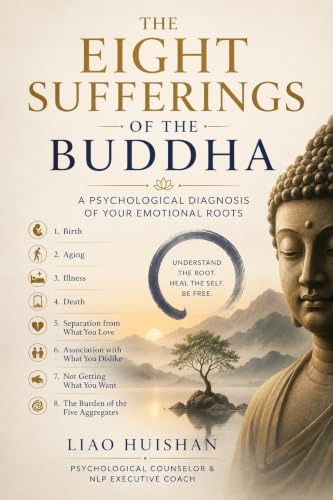 Eight Sufferings of the Buddha
Buy on Amazon
Eight Sufferings of the Buddha
Buy on Amazon
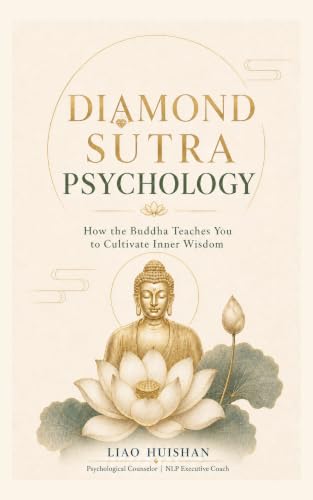 Diamond Sutra Psychology
Buy on Amazon
Diamond Sutra Psychology
Buy on Amazon
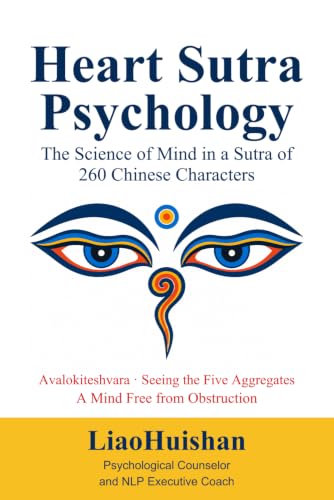 Heart Sutra Psychology
Buy on Amazon
Heart Sutra Psychology
Buy on Amazon
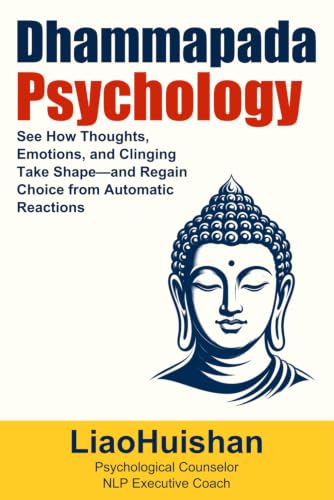 Dhammapada Psychology
Buy on Amazon
Dhammapada Psychology
Buy on Amazon
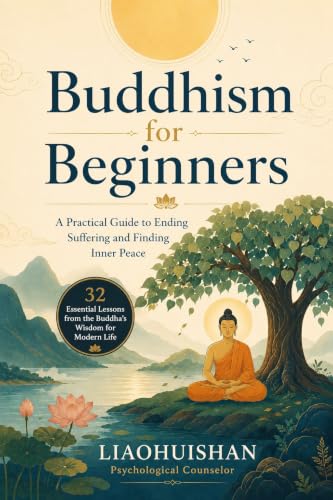 Buddhism for Beginners
Buy on Amazon
Buddhism for Beginners
Buy on Amazon
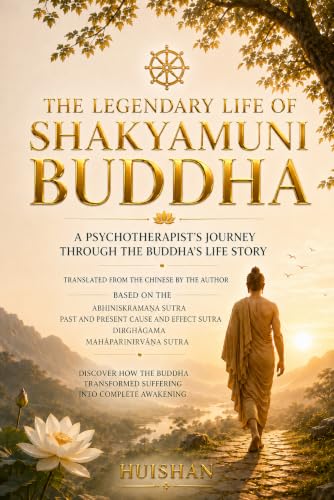 Legendary Life of Shakyamuni
Buy on Amazon
Legendary Life of Shakyamuni
Buy on Amazon
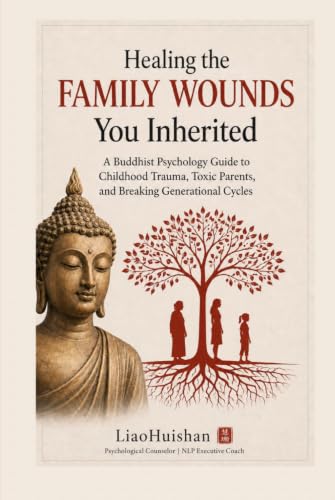 Healing Family Wounds
Buy on Amazon
Healing Family Wounds
Buy on Amazon
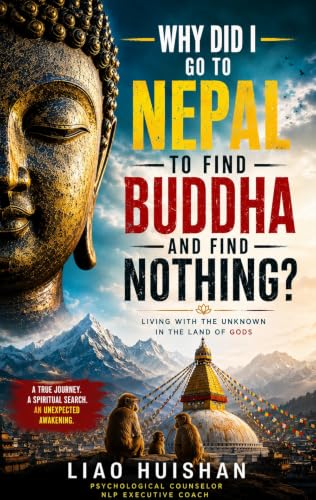 Searching for the Buddha in Nepal
Buy on Amazon
Searching for the Buddha in Nepal
Buy on Amazon
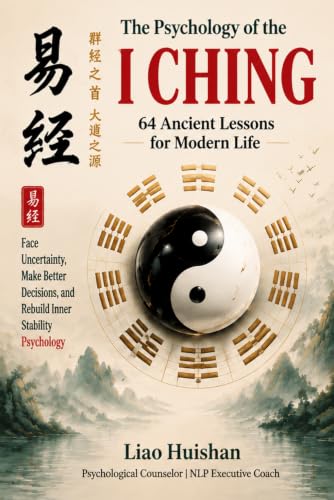 Psychology of the I Ching
Buy on Amazon
Psychology of the I Ching
Buy on Amazon
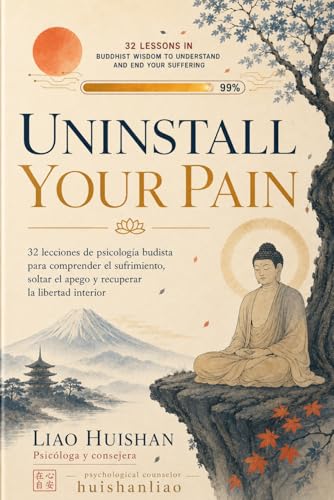 Uninstall Your Pain
Buy on Amazon
Uninstall Your Pain
Buy on Amazon