How Long Is the Diamond Sutra? Text and Reading Time
Hello everyone, I am Liao Huishan.
The length of the Diamond Sutra depends on what you are counting: the scripture itself, a particular English translation, or a book that includes commentary. There is no single page count that applies to every edition. Before comparing two books, check whether their pages contain the same kind of material.
A slim edition is not necessarily incomplete, and a much thicker book is not necessarily a longer version of the sutra. Introduction, notes, parallel languages, font size, and interpretation all change the physical length of a book.
 Diamond Sutra PsychologyBuddhist wisdom and everyday emotional life.
An English paperback for reflective readers.Buy the Paperback
Does the Diamond Sutra have thirty-two chapters?
Many editions organize the text into thirty-two sections. You can see that arrangement in this edition of Kumarajiva’s classical Chinese translation. The number is useful for finding a passage, but it does not tell you how many printed pages an English edition must contain.
Nor should thirty-two short sections be imagined as thirty-two modern textbook chapters of equal length. Some exchanges take more space than others. A section number is a reference aid, not a promise of an equal daily reading assignment.
Why do English editions have different page counts?
Open the contents page and look for three things: where the translated scripture starts, where it ends, and what surrounds it. Some editions place commentary after each passage. Others present the whole translation first and discuss it afterward. A bilingual volume may place two versions beside one another.
For example, a hypothetical 120-page volume might devote only part of those pages to the translated text. That example is not a claim about a specific edition. It illustrates why total pages cannot tell you how long the scripture alone takes to read.
When shopping, also distinguish a translation from an interpretive guide. The latter may help you think about the teaching without claiming to reproduce every line of the sutra. Read the product description and sample rather than deciding by thickness or by the word “complete” alone.
How long should I set aside to read it?
Use your own pace with your chosen edition instead of treating one reading-time estimate as universal. Try a small sample, note how long it takes with pauses, and decide whether you want a first overview or a slower study. Those are different activities, and both can be useful.
If you only want to know the shape of the dialogue, a first pass can leave some questions open. If you want to understand a difficult exchange, stopping to reread it is part of the work, not a failure to finish on time. Recitation, silent reading, and reading commentary also should not be treated as the same task.
For readers seeking a modern reflective companion, Diamond Sutra Psychology is available in English paperback. It is a separate book about the teaching and everyday emotional life, not a measure of the length of every Diamond Sutra translation.
A manageable reading plan without a speed target
Choose one exchange that you can read without rushing. First identify who is asking and what they are asking about. Then underline the part that unsettles your usual understanding. Write the question it raises in your own words before reaching for another explanation.
On a later reading, return to that same exchange. Notice whether you are beginning to hear a distinction that was hidden by the first impression. Perhaps an apparent denial is challenging a fixed way of grasping something. Perhaps you need more context. You do not have to manufacture a confident answer simply to complete a section.
This is a suggested modern reading practice, not a traditional timetable prescribed by the Buddha. Its value is that it keeps your attention on understanding rather than measuring yourself against an imagined ideal reader.
What should I read before buying a commentary?
The Diamond Sutra beginner’s guide gives an orientation to its central ideas. The short guide to three passages in context shows how a familiar quotation can be read alongside its surrounding question.
Then ask what you need from a book: a translation to read directly, historical background, a tradition-specific commentary, or reflection on daily life. Choosing by that need is more helpful than assuming the shortest book is easiest or the longest book is deepest.
About the author: Liao Huishan writes about Buddhist psychology, Eastern wisdom, and everyday emotional life. The reading plan and hypothetical page-count example are contemporary explanatory aids, not quotations from the sutra. See Diamond Sutra Psychology book details and the author’s book collection.
More on the Diamond Sutra
- How to Read the Diamond Sutra: A Guided First Session
- Diamond Sutra Mantra: What Are You Actually Chanting?
- The Diamond Sutra (Vajracchedikā Prajñāpāramitā Sūtra): A Complete Modern Guide
- The Heart Sutra Explained in Plain English
滑动购买更多作品 →
Browse bestsellers on Amazon — tap a cover to open the book page. Full author store: B0H2T1BBYC.
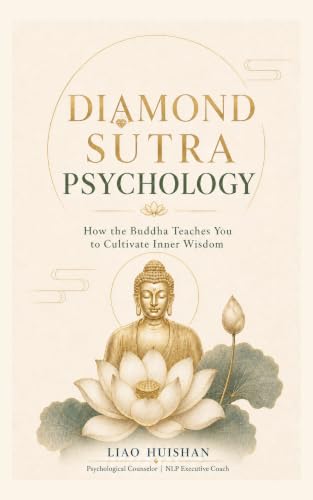 Diamond Sutra Psychology
Buy on Amazon
Diamond Sutra Psychology
Buy on Amazon
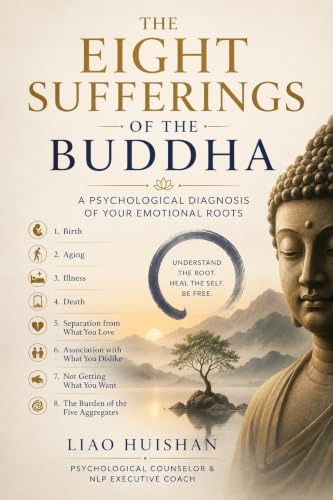 Eight Sufferings of the Buddha
Buy on Amazon
Eight Sufferings of the Buddha
Buy on Amazon
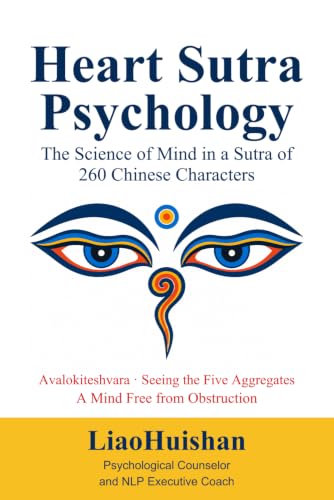 Heart Sutra Psychology
Buy on Amazon
Heart Sutra Psychology
Buy on Amazon
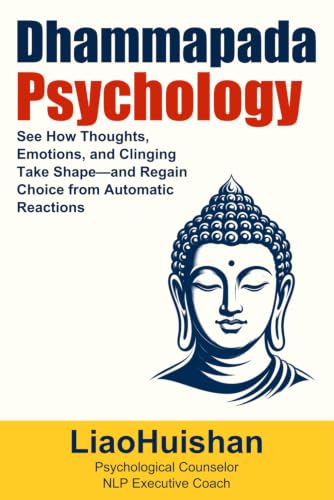 Dhammapada Psychology
Buy on Amazon
Dhammapada Psychology
Buy on Amazon
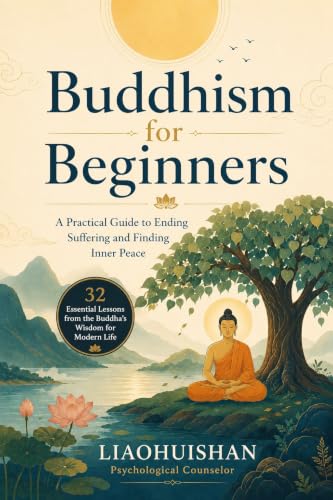 Buddhism for Beginners
Buy on Amazon
Buddhism for Beginners
Buy on Amazon
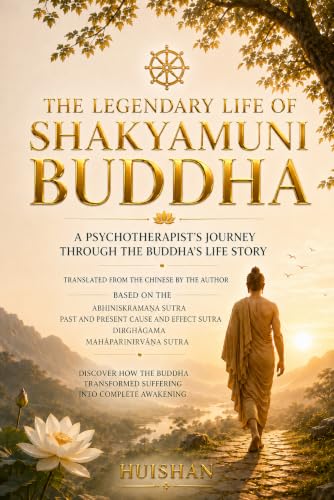 Legendary Life of Shakyamuni
Buy on Amazon
Legendary Life of Shakyamuni
Buy on Amazon
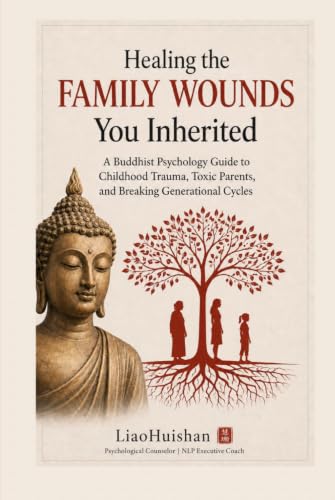 Healing Family Wounds
Buy on Amazon
Healing Family Wounds
Buy on Amazon
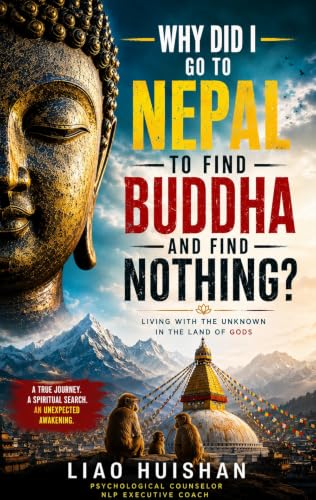 Searching for the Buddha in Nepal
Buy on Amazon
Searching for the Buddha in Nepal
Buy on Amazon
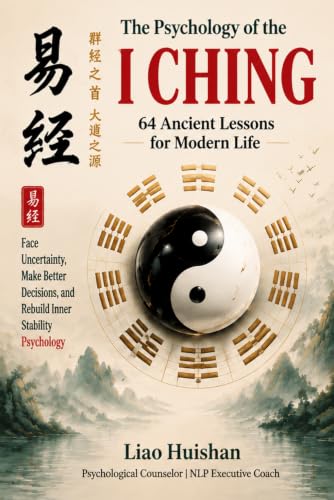 Psychology of the I Ching
Buy on Amazon
Psychology of the I Ching
Buy on Amazon
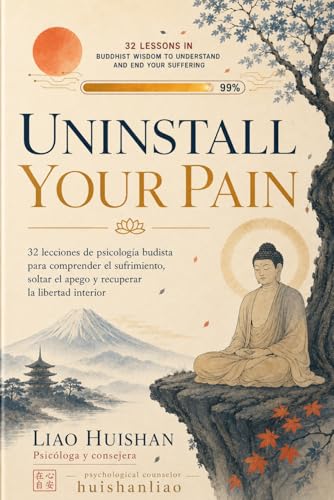 Uninstall Your Pain
Buy on Amazon
Uninstall Your Pain
Buy on Amazon